Ergonomics - Learn the basics and tips about WorkStation Ergonomics, Workplace Ergonomics, Computer Ergonomics & Laptop Ergonomics.
Life Insurance - Life insurance quotes, plans, and applications for individuals in the U.S. Save up to 70%.
Natural Health Products for Warts and Herpes - All natural products guaranteed to treat Herpes, Warts, Shingles, PHN pain, Acne, Eczema, Hemorrhoids, Stretch marks and more - or a full product refund. We ship worldwide!
Herbs and vitamins reviewed - Information about vitamins, herbs and natural products and approaches for a variety of ailments.
Atkins Diet and Low Carb Bulletin Board - Atkins Diet and Low Carb bulletin board is a discussion forum for lowcarb and the Dr. Atkin’s Diet. A great support site.
Earthly Herbs - Natural Products … For a healthier you.
The Posture Page - Better ways to sit, stand and present yourself to the world.
Afford Your Doctor! - No Insurance? Love your doctor? No problem! With Care Entree you can enjoy lower rates that only big insurance companies can normally obtain. Find out how at this site.
Herbal Nutrition Network - Certain products that here are intended to help with joint support and Carpal Tunnel Syndrome.
Professional Massage Therapy in Northern NJ - Thoroughly trained and experienced massage therapist of Alpha Holistics provides services for pain and stress relief, with a difference. Sussex County and northern NJ
Health-Nexus - Very useful health information site that offers links to sites in all categories of health.
AshaKari’s of New York - This site offers information and products for the services they provide - Personal care, aromatherapy, candles, bath products, back massagers.
The Daily Apple - Latest news and expert advice, covering illness, disease prevention and everyday health.
Healthology - Provides health and medical information, written by professionals for consumers, and offers interactive online events.
Safety Online - A community for occupational safety professionals.
Stay Healthy - News, discussion, articles, and information on products and drugs to stay healthy.
Positive Health - Complimentary medicine for the 21st century.

Great American Products - offers herbs, vitamins, ‘organic green supreme multi’, health tips, articles, and recipes.
Earthspharmacy.com - A leading manufacturer of superior-quality, science-based nutritional supplements. With a full line of products including weight loss, men’s and women’s health, arthritis, memory, sports, vision, relaxation, general vitamins, minerals, herbs and more.
OliviaCare.com - Olivia Care is a true Aromatherapy skin care line. All their products are formulated with pure olive oil. Their fragrance derives from only the purest essential oils from the Provence region of France.
RippleCreek.com - 100’s of Vitamins, Herbs, Minerals, and Supplements.
Enzyme Essentials - Learn more about how enzymes provide digestive and gastric relief.
WebRx - This site addresses questions about common health problems. Shop WebRx for the answers.
Rainbow Light - Stay healthy during flu season. Balanced nutrional content.
Emjoi - European beauty products.
Are you prepared? - This site sells different Red Cross first aid packages - an essential item for every individual.
Vitacost.com - Is there an Arthritis Cure? Click here to read the doctor’s report! Also get Atkins diet and vitamin products at wholesale prices.
Pain Relievers - This site sells products specializing in pain relief for sufferers of joint pains. Including braces, magnets, creams, pillows, wraps, and excersizers.
Tools for Wellness - A large resource of alternative health products and information. Including products for meditation, relaxation, pain relief, and much mores.
Smallflower.com - discover the power of aromatherapy & solutions for your body.
Pure Lip - A new breakthrough for cold sore sufferers - all Natural Cold Sore Prevention.
GreenMarketplace.com - Earth-friendly, recycled accessories, natural cleaning supplies for a healthy home, and organic, non-chlorine feminine care products.
Allergies and what can I do to control them? - Visit Breathefree.com. Buy discount health products. Full line of air purifiers.
ImmuneSupport.com - This site offers products for enhancing immune support - relates to immune building from a perspective of many disabilities.
Set a Goal - Asimba empowers active-minded people to reach their personal goals in general fitness, participatory sports, recreational outdoors and personal nutrition.
Global Health and Wellness - State of the Art Advanced Magnetic Health Products.
Massage Therapy & Bodywork Practices - Concise synopsis of massage therapy, bodywork practices and assisted stretching with respect to muscle aches, pains and emotional stress.
Vita-Master Nutritional Software - Comprehensive nutritional software database with information on vitamins, herbs, health problems, nutrition and wellness therapies.
Ameriplan - AmeriPlan USA Corporation… a premier Provider Access Organization, saving its members hundreds of millions of dollars in supplemental healthcare since 1992.
Ayurvedic Alternative Herbal - Manufacture, retailer, and wholesaler of strictly traditional ayurvedic alternative herbal medicines, supplements and herbs.
Discover Health and Wealth - Protect your health with simple, safe and effective holistic alternatives. Herbal Products for inner cleansing, non-toxic skin care, weight loss management, organic nutrition supplements, stress management.

While researching Carpal Tunnel Syndrome, these were the topics that appeared to be related in some way. Either as a forerunner to CTS,  and its related syndromes, or similar conditions that also affect one in the workplace. For a more thorough listing of health and safety links click here.

The world of ergonomics might have had its most important month ever in November. “Big deal,” you say! Maybe, maybe not. In early November, the Clinton Administration passed the long awaited OSHA Ergonomics Program Standard. The Standard has been in the works for almost 10 years, initiated by Elizabeth Dole during George Bush’s term. In an effort to protect American workers against the risks of musculoskeletal disorders caused by repetitive motions, as of January 16, 2001 corporations will be required to comply with the standard. The basics of the OSHA Ergonomics Program Standard are the following:

If a work-related musculoskeletal disorder (MSD) has occurred in your workplace and You have “Action Trigger Jobs” in your workplace that routinely involve exposure to relevant risk factors.

In order to be compliant with OSHA, you must have an Ergonomics Plan that involves these 8 elements:
1. Determining Action Triggers that caused the MSD occurrence
2. MSD management within 7 days of the occurrence
3. Management leadership and employee participation
4. Training employees involved in setting up and managing the ergonomics program
5. Training team leaders
6. Job hazard analysis
7. Implementing initial controls and then permanent controls
8. Program evaluation

Many business groups oppose the regulations, but OSHA Director Charles Jeffress has confidence in the program. “Years from now, when ergonomic programs are an accepted and successful part of the American workplace, people will be celebrating the substantial benefits achieved,” Jeffress said.

To view the OSHA Ergonomics Program Standard in its entirety visit http://www.osha-slc.gov/ergonomics-standard/regulatory/regtext.html

Future newsletters will contain more detailed information of OSHA’s revolutionary standard.

The other ergonomics happening was the National Ergonomics Conference and Exposition in Las Vegas from November 27 - December 1. An excellent turnout of ergonomists and interested business parties attended presentations regarding injury prevention programs, return to work strategies, ergonomics case studies, and the latest ergonomic innovations. For me the convention was an opportunity to see some of my present vendors, meet new ones, and to network with the great people in the field of ergonomics. Amongst those attending, views differ on the potential effects of OSHA’s Standard, ergonomic strategies, and the role of ergonomics in the public and private sector. Yet, everyone seemed to agree that we are on the verge of a tremendous advancement in the protection of workers from the hazards of the workplace.

MSD Article:

Tennis Elbow is not limited to tennis players, it is just one of many ways you can get this MSD. There are many symptoms of Tennis Elbow. These symptoms include stiffness, increased pain in the elbow after prolonged activity involving the wrist and hand, and difficulty straightening the elbow.

Product Review:

Mousing can be an extremely fatiguing activity. I always recommend to my clients that they have more than 1 mousing option at their disposal. The Itac Evolution performs all of the functions of a traditional mouse and it provides an excellent change of pace. The Evolution allows the user to glide their cursor around their display by easily rolling a light roller ball.

Tip of the month:

Avoid prolonged work with your elbow in extension greater than 150 degrees. Do not perform strenuous activities with your elbow nearly straight. Move yourself closer to the work you are doing in order to generate more force and minimize stress on your elbow.

ErgErcise of the Month:

Pour Man’s Stretch
1. Extend your left arm out in front of you as you are pointing at something.
2. Make a fist and slightly point your wrist downward.
3. Rotate your entire arm inward as if you are emptying a pitcher of liquid. Hold position for 10 seconds. Repeat 5 times.
4. Repeat with your right arm.

Reproduced with permission from ErgAerobics, Inc. an ergonomics consulting firm specializing in the prevention of workplace injuries. For more information, please call 212.388.1917 or point your browser to http://www.ergaerobics.com

Here we go. As of January 16, 2001, OSHA has arrived on the ergonomics scene. As one of former President Clinton’s last actions in office, he succeeded in passing the OSHA Ergonomics Standard into law. It was a complicated process that was begun by then Labor Secretary Elizabeth Dole during George Bush’s term. Many say that the standard will be held up in the courts, but George W. has not attempted to knock it down yet.

Many opposed to the standard requested that it be upheld until the National Academy of Sciences (NAS) concluded their study on ergonomics. The results of that study came in last week and the study concluded that “well-designed intervention programs,” such as the programs proposed by OSHA’s ergonomic standard, can reduce lost productivity due to musculoskeletal disorders (MSDs). “Our standard provides the framework to enable employers to effectively respond to the concerns identified by the NAS panel,” says OSHA assistant secretary Charles Jeffress. Jeffress says OHSA’s program will prevent 460,000 injuries and save $9 billion each year.

So now we have this law that says all businesses are required to comply by October 14, 2001 or OSHA will come knocking at your door. Most business people have no idea what the standard entails. Many don’t even have a clue what ERGONOMICS is. Risk and Safety Managers, Human Resource professionals, and Corporate Health professionals want as much information about the Ergonomics Standard in as clear and concise manner as possible.

Ergonomics and the Lower Back Article:

We’ve all heard the statistics. 80% of Americans experience a significant lower back injury at some point in their lives. We’ve heard the explanations. We push ourselves too hard. We were never intended to stand upright. It’s all in our heads. Does any of this sound familiar? Regardless of the reason, the fact is that back injuries occur ­ sometimes by way of traumatic injury and sometimes for “no reason at all.” As occupational medicine professionals it is our job to help our patients onto the road to recovery.
Please read on at http://ergaerobics.com/erginfo/art8.sht

Product Review:

Plantronics Vista Amplifier and Mirage Headset I do not like headsets. They annoy me. The sound is usually awful and the person on the other end can’t understand a word you’re saying. Worst of all, they get in the way. Like them or not, headsets are an ergonomic essential for anyone who works at a computer and speaks on the phone. If you live in this century, then this probably is you. A good headset may be the single best way to avoid neck and upper extremity MSDs from computer use.

Tip of the month:

Be sure to tighten your abdominals (stomach muscles) in order to support your lower back whenever performing a strenuous activity. This includes lifting, reaching, or bending.

ErgErcise of the Month:

Pillow Squeeze:
To be performed while sitting at work or elsewhere. 1. Sit normally in your chair or seat with your fee firmly on the floor. 2. Suck your stomach in as if you are pulling on a tight pair of pants. 3. At the same time, push your lower back into the back of your chair. Hold the position for 5 seconds. Repeat 10 times

Reproduced with permission from ErgAerobics, Inc. an ergonomics consulting firm specializing in the prevention of workplace injuries. For more information, please call 212.388.1917 or point your browser to http://www.ergaerobics.com

Small Time Ergonomics

When the Bush administration recently repealed the OSHA Ergonomics Standard small businesses breathed a sigh of relief. But wait a second. Even though there is not yet a law requiring ergonomic adjustments to improve your work environment doesn’t mean it won’t help your business. In the most recent Entrepreneur, the monthly magazine targeted at small business owners, an article on ergonomics emphasized that an ergonomic program is actually a good idea for small business owners. The article states, “OSHA may not be breathing down your neck, but making your workplace ergonomically sound may just be good business.”

Some suggestions made in the article are the following: Do some research on ergonomics Educate your employees about musculoskeletal disorders associated with the work they do including the tell-tale signs and the risks involved in repetitive activities and awkward positioning Make the proper adjustments to your workplace

Rachel Michael from Ergo Web is quoted as saying that “You will see improvements in injury rates, compensation costs and insurance premiums, and you’ll reduce costs for hiring temporary workers to replace injured people. There are also studies that show it’s great for worker retention.” Small business owners can use any edge they can get. When you can implement a program that makes your workplace a better environment to work, your employees appreciate that on many levels. Health, productivity, and overall job satisfaction will increase.

Neutral Posture Ergonomics :

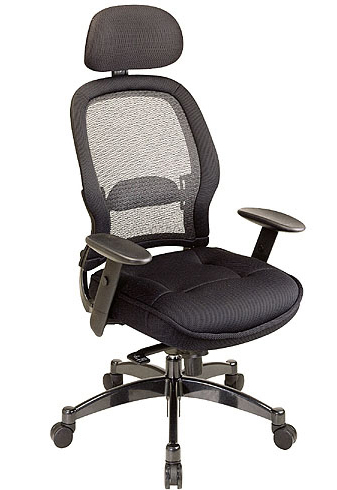
You’ve seen inexpensive “ergonomic” chairs and others that promise to fit your needs. You may even sit in one of these and pay the price of saving a few bucks in the short run. Now try the chair that rated highest in overall adjustability and comfort in the World Bank Ergonomic Study. Neutral Posture has a chair that’s right for everyone. Contact us about ordering your next office chair – the best chair you’ll ever work in. Please read on at: http://everythingergonomic.net/chairs/npe.sht

Product Review:

Air Packs Children as young as preschoolers carry backpacks filled with books, and it could cause harm to young bodies. According to a Simmons College study, 55 percent of children carry their backpacks the wrong way. “The most serious problem is that children are reporting back pain,” Dr. Shelley Goodgold of Simmons College said. “They can have shoulder pain, they can have tingling down the arm.” The pain is not only uncomfortable to children, it can put them at future risk. “It felt like there was a lot of weight bearing down on my shoulders,” Harry Edwards, 10, said. Choosing the right backpack and wearing it properly is important, Goodgold said. “The load should be light, and I’d say 10 to 15 percent of the body weight, and also there are backpacks that have ergonomic designs or features that are better,” she said. Children should also have a pack with more than one compartment, with the heavier weight near the back. Hip and chest belts should be worn to keep the weight in the right areas.

Goodgold gave three warning signs of a heavy or improperly worn backpack: struggling to get it on, changing posture to carry it or complaining about pain. Any of those mean that it’s time to lighten up and most likely lift the pack up and bring it closer in to the back. The Air Pack line of backpacks does just that. I’ve been using the Air Pack for several weeks now and here’s what I’ve found. The FACTS - Function, Aesthetics, Comfort, Tell me more - about the Air Pack.

Function: Using the concept of innovative ‘air technology,’ a unique strap system, and triangular bag shape, Air Packs developed bags which give ‘ergonomically correct’ support without the fussiness of a waist belt and the use of only one strap. The bag makes you stand up straight and are easy to use. An air filled pack at the base of the bag sits at the users lumbar area to prevent the bag from hanging too low and weighing too heavily on the users spine and shoulders. The result is that the load is put in the right place, hugging the body, so the load is carried efficiently. This prevents injuries by using stronger muscles and taking weight off of smaller, weaker ones.

The bag I’ve been using has 6 outer pockets, each with multiple inner pockets. This bag was designed to carry a laptop and books in addition to other large objects. The inner pockets make storage of computer discs, a cell phone, PDA device, pens, a water bottle etc. very manageable. The air pack can be simply be filled to the user’s personal size and needs. Shoulder strap adjustments are made very easily with top and bottom clasps. There is also a durable polyurethane handle for carrying the bag with one hand when necessary.

Aesthetics: Each of the Air Pack designs look much like other backpacks and shoulder bags. They come in sleek designs and several different colors and sizes. This is not a bag that’s all about function. They look cool, too. In addition the IllumiNITE fabric provides safety at night.

Comfort: Air Packs are all about comfort. Keeping a load close to the body reduces a load significantly. The closer it is, the more it appears to simply be an extension of the body. Most backpacks and shoulder bags hang loosely and unbalance the user. Air Packs stay close and feel snug. In addition to the lumbar air pack, the shoulder straps are also filled with air, providing soft contact on sensitive shoulder areas. Because they come in a variety of shapes and sizes, there is an Air Pack for everyone.

Tell me more: Prices range from $29.95 to $124.95 You can purchase all of the Air Packs bags at www.everythingergonomic.net/

Tip of the month:

Prevent neck, upper back, and arm pain with proper spinal alignment during all strenuous or prolonged activities. Avoid postures such as forward head, tilting, or rotating in order to promote symmetrical weight bearing on the spine. Your head weighs approximately 10 pounds and if not supported properly can cause great strain down the chain.

ErgErcise of the Month:

Muscle Pose Stretch:
Position: Sitting 1. Place your head in the neutral position, looking straight ahead. 2. Place your left hand on the back of your head. 3. Keeping your hand on your head, rotate your head half-way toward your left shoulder (45 degrees). 4. Keeping your back straight, gently pull your head toward your left knee. Hold For: 10 seconds Repetitions: 5-10 times 5. Repeat to your right side using your right hand. Purpose: Stretches the levator scapula (muscle in the back of your neck that holds your head up). Increases blood flow through the neck and into and out of the head and arm. Prevents neck, upper back and arm pain.

Reproduced with permission from ErgAerobics, Inc. an ergonomics consulting firm specializing in the prevention of workplace injuries. For more information, please call 212.388.1917 or point your browser to http://www.ergaerobics.com

Click here for Newsletter from Dec. 2000 to Jan. 2001

Click here for Newsletter from Jan. 2000 to Feb. 2001

Wendy Ghannam expressed relief that her seven-year ordeal against theAgency for International Development(USAID)was finally over in aninterview held recently in downtown Washington, DC. Ms. Ghannam received afavorable ruling from the U.S. Equal Employment Opportunity Commission (EEOC) regarding the appeal to her complaint of employment discrimination due toongoing problems with carpal tunnel/repetitive stress disease.

In several complaints consolidated by the agency, Ms. Ghannam allegesthat she was discriminated against based on race, sex, and disability. Inthe complaint she indicates that this occurred when:
(a) the agency failed to accommodate her disability (repetetitive stress/carpal tunneldiseases);
(b) she was placed on absence without leave status (AWOL) while unable towork due to her disability for over five months;
(c) she was denied any workmen’s compensation prog. assistance and monies;
(d) she was downgraded and denied a step increase when she returned to work following disabilityleave in 1995; and
(e) she was denied accommodation and training after she returned to work when she was reassigned by her agency.

Ms. Ghannam alleged also that she was retailiated against when USAIDcontacted her health plan provider and demanded an investigation of her health program (which resulted in discontinuation of coverage for her son), and that her signature on her 1994-95 performance evaluation was forged byagency supervisors during her medical absence.

The Administrative judge who first heard Ms. Ghannam’s complaint issued a decision finding that she failed to establish discrimination on any basis. The judge also concluded that USAID had attempted to accommodate Ms. Ghannam by reassigning her to a receptionist position. After our initialinterview Ms. Ghannam readily admitted that the EEOC Admin. Law Judge accepted an agency bribe following that first initial hearing on Jan. 8,1998.

Following her appeal that was submitted further to internal channelswithin the EEOC, however, the Commission reversed that first decision regarding Ms. Ghannam’s claim that she was denied reasonable accommodationwhen the agency failed to consider her physician’s request for assistivetechnology (voice activation), which would have permitted her to resume her original GS-7 employee development position at the agency. As a result ofthe violation, the EEOC has ordered the Agency for Internatonal Development (USAID) to:

1. Retroactively re-instate Ms. Ghannam to her former GS-7 position within 30 days.
2. Award Ms. Ghannam back pay, with interest for all wages and benefits lost, if any, between the day she was denied reasonable accommidation and the date she returns to duty at the agency/or declinesreinstatement–or is otherwise unable to return to duty, or would have been subject to separation as part of a reduction in force.
3. Provide training to all the management officials responsible forthis matter at the agency in their duties and obligations under the Rehabilitation Act of 1973.
4. Submit a report of compliance (which includes documentation of the agency’s calculation of back pay and other benefits due to Ms. Ghannam.

Aside from the above requirements, the agency was also ordered to post in “conspicuous” places a Notice indicating that they had violated the Rehabilitation Act of 1973. Ms. Ghannam was also awarded attorney fees aswell.

Ms. Ghannam noted that: “This ruling and the relief that I received is a victory for all working women who struggle everday to have theirworkplace concerns heard. It recognizes the tremendous financial and emotionalcosts involved when dealing with the dirty tactics of some employers–even theFederal Gov’t who is not immune to these same types of behaviors. Also, Ifeel that it is definitely high time that employers face the problems aswell as the workplace needs of injured workers because of carpal tunnel/repetitive stress. Groups like 9 to 5 (The National Association ofWorking Women) were very supportive during this lengthy EEOC hearing process.” Ms. Ghannam says that she plans to write a book about her experiences and continue to speak out about relevant workplace discrimination around the country.

As of this date, Ms. Ghannam and her attorney are still in the grips of initiating a final conclusion in a judicious mode with the agency, USAID,located in Washington, D.C. and may be taking their concerns into U.S. Federal Court with the direct oversight of the EEOC in next few months. Ms. Ghannam can be reached at the above contact info, and is available tospeak around the country relative to her workplace debacle experiencesconcerning both agencies.

Contact:
Wendy W. Ghannam
(703) 938-6253
E-Mail: Desert_Rose72@Hotmail.com

This article is courtesy of the Washington University website.

WASHINGTON — More than 28 million Americans use computers each day and, according to officials at the Occupational Safety and Health Administration, many risk coming down with a painful, debilitating condition, carpal tunnel syndrome.

“Carpal tunnel syndrome, or CTS, involves the median nerve and the flexor tendons, which extend from the forearm into the hand through a ‘tunnel’ made up of wrist bones (carpals) and the transverse carpal ligament,” said Army Dr. (Capt.) Matthew Hengy, a family practice physician at the Pentagon. CTS can develop when repetitive wrist motion, fluid retention or acute trauma creates pressure on the median nerve at the wrist.

“Arthritis-related diseases such as rheumatoid arthritis can also cause CTS. These diseases cause pain and swelling in joints and other parts of the body. They can cause swelling of tissues in the carpal tunnel, resulting in pressure on the median nerve,” he said.

Hengy said the source of trouble is unknown with many patients because virtually anything that swells the tendons or pinches the median nerve can lead to CTS or make it worse. Injuries such as a blow to the wrist could cause CTS, for instance, because a carpal bone might fracture, break or otherwise pinch and damage the median nerve.

“The results can be tingling, numbness and, eventually, disabling pain. CTS can strike anyone, and its consequences are serious,” he said. Work-related cases are highest among those ages 20 to 40. Nonwork-related cases are highest among persons in their 50s.

“The condition is treated with steroids, anti-inflammatory drugs, physical therapy, and, in severe cases, with surgery,” Hengy said. The return of hand and wrist functions is often complete, but not always, he added.

Awareness of the problem and its causes are crucial to prevention, as are the proper use of ergonomic aids and attention to your work routine, Hengy said. CTS isn’t limited to computer operators. Other prime candidates include draftsmen, meat cutters, secretaries, musicians, assembly line workers and automotive repair workers, but anyone whose work involves repetitive movement of the hands can be at risk, he said.

“There were 2 million workers’ compensation cases reported in 1995. CTS was the most common and costly cumulative-trauma disorder and accounted for one-third of the cases. Back injuries were second,” said Linda Garrison, a Bureau of Labor Statistics economist in the Labor Department. “Half of all the workers afflicted by CTS lost 30 days or more from the workplace.” Statistics also showed women accounted for 72 percent of the cases.

The exact numbers of CTS cases over the years would be hard to pin down, if not impossible, but they’re clearly on the rise. Garrison said reported computer-related injuries of all types have soared more than 8,000 percent from 23,800 cases in 1972 to 2 million in 1995 — and the 1995 caseload was six times higher than the 332,000 reported in 1994.

CTS workers compensation cases cost up to $65,410 each in lost wages and medical benefits, according to July 1996 statistics published by the National Council of Compensation Insurance. The council’s average 1993 dollar-loss figure was $21,453. The actual cost to the national economy becomes much greater when the costs of lost production, employee rehabilitation, and hiring and training replacements are added in.

Hengy said common CTS symptoms include:

o Pain, tingling and numbness in the thumb, index, middle or ring fingers, or tingling in the entire hand.

o Pain that shoots from the hand up the arm as far as the shoulder.

o A swollen sensation in your fingers, although they may not be visibly swollen.

o You may notice that your symptoms are worse at night.

o Your hands feel weak in the morning.

o You drop objects more than usual.

o You have trouble grasping or pinching objects.

o You have trouble using your hands for certain tasks, such as buttoning a shirt, handwriting or opening a jar lid.

o The muscles at the base of your thumb are smaller and weaker than they used to be.

“At first the symptoms come and go and usually are affected by excessive use of the hand, although there may be no symptoms when the hand is at rest,” Hengy said. “As the condition worsens and pressure on the nerve becomes greater, the person may experience constant numbness.”

If you think you may have CTS, ask your primary care physician to review your medical history and examine your hands and wrists. One or all of the following tests can help confirm a diagnosis of CTS, he said:

o Tinel’s Sign Test. The doctor will gently tap the front of your wrist to see if you feel tingling or pain in your hand or forearm.

o Phalen’s Sign Test. The doctor will ask you to bend your wrist down as far as it will go and to hold this position up to three minutes to see if you feel tingling or pain.

o Nerve Condition Velocity Study. This test measures the nerve’s ability to send electrical impulses to the hand muscles, to see if the electrical impulses slow down in the carpal tunnel.

o Blood tests and X-rays of the hands may reveal whether CTS stems from a medical problem.

“For some patients exercising can temporarily relieve the pain,” Hengy said. He recommends performing the following four-step exercise 10 times a day, especially before starting an activity. Start with your arms outstretched in front of you as if typing:

Step 1: Slowly bend your hands back at the wrists with fingers fully extended. Hold for 10 seconds, then straighten your wrists.

Step 2: Stretch your arms and hands forward with fingers fully extended and hold for 10 seconds. Be careful not to push too hard and cause pain. Return to the starting position.

Step 3: Make a tight fist and hold for 10 seconds. Release.

Step 4: Straighten your wrist and extend the fingers fully for 10 seconds. Return to Step 1; do four or five repetitions.

Researchers in a 1996 study at the Orthopedic and Research Center in Oklahoma City taught these pain-relieving hand and wrist exercises to 81 carpal tunnel syndrome sufferers. They found that just one minute of exercise was enough to reduce the pressure on the victim’s median nerve — and the pain. In some cases, relief lasted several hours.

Step 1: Starting in a typing position, slowly bend your hands back at the wrists with fingers fully extended and hold for 10 seconds. Return to the typing position.

Step 2: Straighten your wrists, stretch your arms and hands forward with fingers fully extended and hold for 10 seconds. Do not cause pain by overstraining your hands and wrists. Return to the typing position.

Step 3: Make a tight fist and hold for 10 seconds. Return to the typing position. Step 4: For the second time, straighten your wrists, stretch your arms and hands forward with fingers fully extended and hold for 10 seconds. Return to the typing position; do four or five repetitions.

We hear a lot about ergonomics, posture, wrist deviation, and exercises as self care for symptoms - or avoidance - of carpal tunnel syndrome. There is another self treatment for your kit of survival techniques and that is massage…specifically self massage.

As I mention in my book, Carpal Tunnel Syndrome: How to Relieve & Prevent Wrist “Burnout!” unlike back pain, the nice thing about massaging the arms, wrists, fingers and hands is that you can reach all of it.

Carpal tunnel syndrome represents an impingement of the nerve by inflamed muscles. It stands to reason that reducing the swelling would be a practical approach. This is what is happening when the doctor gives you anti-inflammatories, but massage doesn’t have the side effects and it’s non-invasive. Beyond the inflammation caused by overuse or incorrect use of the hands and wrists, inflammation can have its source in fluid accumulation from old sports injuries, pregnancy, estrogen replacement, muscle anomalies, arthritis, your avocation and numerous other possibilities.

If the area is inflamed and acute (having existed for less than 2 weeks), an ice massage may be in order. Get a paper or styrofoam cup, fill it with water and freeze. Tear the lip of the cup back and use the ice to massage your wrists and forearms.

If the area is inflamed and chronic (over two weeks) massage the area from elbow to fingertips slowly and gently with your other hand. Circular motion on both sides works fine. Stroke up the arm after you finish massaging an area. Inflammation means that you need to work gently. Your finishing strokes should always be from the hand up the arm.

You can use the same process as I’ve described in the previous paragraph for prevention. The only difference would be the amount of pressure could be greater - a lot greater. The hands and fingers are hard working and seem to like a good massage workout. The key is vasodilation to relieve the tension and to bring healing and repairing nutrients into the area as soon as possible.

The nice thing is that you can massage your arms and fingers while waiting at a signal, sitting in traffic or many other places. This helps keep you busy and less stressed than you re when you are just sitting and waiting. There are no special tools or equipment. Your fingers and arms will feel renewed.

If you are interested in learning a massage routine, there is one described in my book. It is also in the video which is 20mins of demonstration of the various techniques described in the book.

The book is available from: HWD Publishing, PO Box 220 XA, Veneta, OR 97487 for $13.95 + $2.50 s/h; the VHS tape (20 mins) is $2l.95 + $2.50 s/h or you can buy both & get a free 8 1/2 x 11 laminated poster for $39.15 including s/h.

(Be sure to seek medical advice if symptoms persist). Excerpts herein are copyrighted, 1993 by Rosemarie Atencio.Copyright 1993 by Rosemarie Atencio. This article may be archived,reproduced and/or distributed provided that it is left intact and that noadditions or changes are made to it. The article is the sole property ofRosemarie Atencio. No further use of this work is permitted withoutexplicit consent of the author.

When the wrists are incorrectly positioned at a keyboard, pressure is put on a nerve found in a “tunnel” in the wrists. In that tunnel, as the tendons grow and expand, it can cause inflammation. Symptoms of carpal tunnel syndrome also include a burning sensation in the fingers, or even no feeling at all.

Dr. Guy Smith, medical director of Lafene Health Center, said those who spend a majority of their day sitting at typewriters or computers are most likely to suffer from carpal tunnel syndrome. Also, Smith said, those who use vibratory equipment in their daily jobs, such as jackhammers or other tools associated with construction work, are just as susceptible to the disease.

“The cause of the disease is largely occupational,” said Smith, who sees students on a weekly basis to treat carpal tunnel syndrome.

Beth Unger, vice provost and professor of computing and information sciences, agreed with Smith.”If you use a computer for more than six to seven hours per day, you need to take proper precautions,” Unger said. Smith said those precautions are both inexpensive and effective.”If you can find the associating factor (of the disease), that’s the cheapest treatment,” she said.Smith added that anti-inflammatory creams can take the pressure off the nerve as well.

There are wrist splints that keep the wrist in a neutral position. The cost of these splints usually ranges from $25 to $30, Smith said.

The Department of Computing and Information Sciences is also taking the necessary steps to help prevent carpal tunnel syndrome. Unger ensures all computers in her department are equipped with wrist rests, and said most computers now come with warning labels when they are sold to consumers. These labels warn the consumer about the dangers of incorrect positioning of the wrists while sitting at the keyboard for extended periods of time.

Smith said he sees the new warning labels as a way to educate the public about carpal tunnel syndrome.

These precautions and tips add up to making students more aware of carpal tunnel syndrome, and one of Unger’s priorities is to try to protect students from its dangers.

“We educate (students) and try to make available anything to them that would keep them from being susceptible to carpal tunnel syndrome,” Unger said.

Proper position prevents carpel tunnel

1. Adjust your chair

Adjust the height of the chair so your feet are firmly on the floor but not so low that your weight is not evenly distributed over the full seat surface.
Keep your body in a relaxed, yet upright, position. The backrest of your chair should support the inward curve of your lower back.

2.Adjust your keyboard and mouse

To prevent having to reach to the front or side, position the keyboard and pointing device (ex: mouse, trackball, etc.) directly in front and close to you.
Press the keys gently; keep your shoulders, arms, hands and fingers relaxed.

3.Adjust your monitor

Position whatever you are looking at most of the time (either the monitor or paper material) directly in front of you so that you do not have to turn your head to the side while you are typing.
Adjust the monitor height so that the top of the screen is at, or slightly below, eye level. Your eyes should look slightly downward when viewing the middle of the screen.

Copyright 1998, Student Publications Inc. All rights reserved.This document may be distributed electronically, provided it is distributed in its entirety and includes this notice. However, it cannot be reprinted without the express written permission of Student Publications Inc., Kansas State University.